
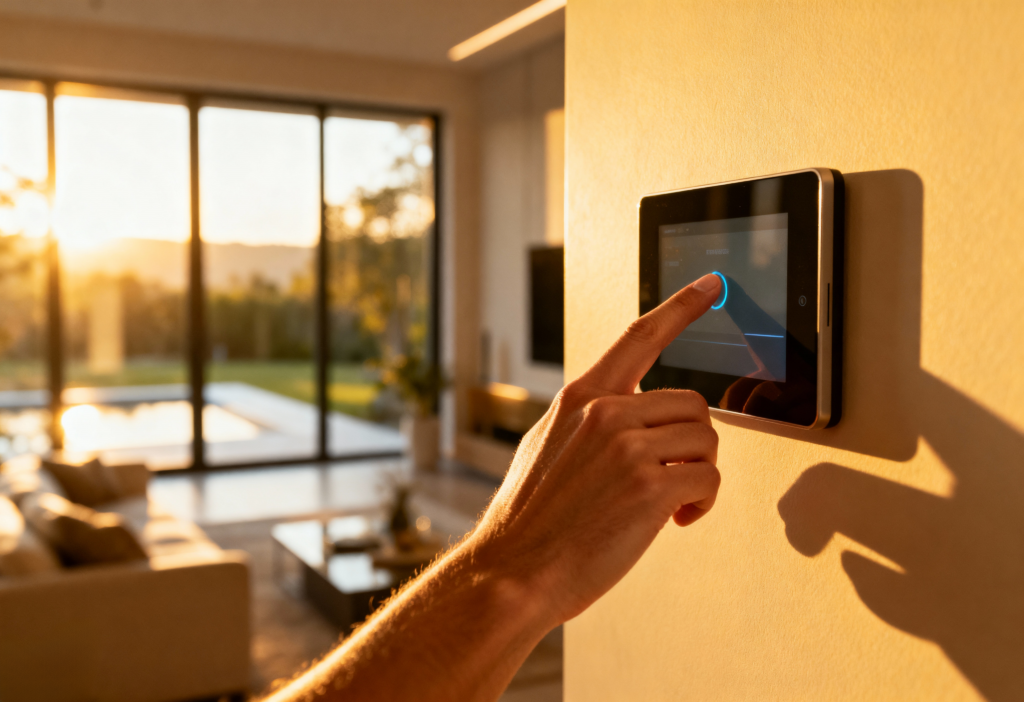
Choosing the right thermostat isn’t just about convenience in Florida — it’s about controlling comfort, humidity, and energy costs in a climate that demands cooling most of the year. The right thermostat can help your AC run smarter, reduce unnecessary wear, and keep indoor conditions comfortable even during long, hot, and humid stretches.
In this guide, we’ll break down the best thermostats for Florida homes, explain which features matter most in our climate, and help you understand how different models support energy efficiency, humidity control, and modern HVAC systems. Whether you’re upgrading an older thermostat or pairing a new one with a high-efficiency AC system, this overview will help you make a confident, cost-effective choice.
Why Thermostat Choice Matters in Florida
Year-Round Cooling Demand
Florida homes rely on air conditioning far more consistently than homes in seasonal climates. Because your AC runs for much of the year, the thermostat plays a critical role in how often the system cycles, how long it runs, and how hard it works to maintain comfort. A poorly matched or outdated thermostat can cause short cycling — frequent on-and-off operation that increases wear on compressors, motors, and electrical components. The right thermostat helps regulate cycle length properly, keeping your system running efficiently without unnecessary strain.
Humidity Control Importance
In Florida, comfort isn’t just about temperature — it’s about moisture control. Many modern thermostats work in tandem with HVAC systems to support better dehumidification by managing run times more intelligently. Features like humidity monitoring, adaptive recovery, and smart setback strategies allow the system to remove excess moisture without overcooling the home. This helps prevent that sticky indoor feeling, reduces mold risk, and supports healthier indoor air overall.
Energy Savings Potential
Advanced thermostats can significantly improve energy efficiency by optimizing how and when your system operates. Programmable and smart thermostats reduce cooling demand during low-occupancy periods, while learning algorithms and occupancy sensors fine-tune operation automatically. When used correctly, these controls help your AC system operate closer to its intended efficiency level, supporting better real-world performance and lowering monthly energy bills without sacrificing comfort.
3 Types of Thermostats
1. Manual Thermostats
Manual thermostats are the most basic option available and are often the most affordable. These models require you to adjust the temperature by hand and maintain the same setting until you change it again. Their simplicity can be appealing for homeowners who want minimal technology and straightforward operation. However, because they lack scheduling and automation features, manual thermostats offer limited control over energy use and can lead to higher cooling costs in Florida’s long AC season.
2. Programmable Thermostats
Programmable thermostats allow you to set temperature schedules based on time of day and day of the week. This makes it easier to maintain comfort while reducing energy use when the home is empty or during sleeping hours. They are ideal for households with predictable routines, such as standard work schedules, because once programmed, they automatically adjust without daily input. While they offer better efficiency than manual models, they still rely on accurate programming and don’t adapt on their own if routines change.
3. Smart & Wi-Fi Thermostats
Smart thermostats and Wi-Fi thermostats provide the highest level of control and flexibility for Florida homeowners. These systems connect to your home’s Wi-Fi, allowing you to monitor and adjust temperatures remotely using smartphone apps or voice assistants. Many smart thermostats learn your habits over time and automatically adjust cooling patterns for comfort and efficiency. They’re also designed to integrate with zoning systems, humidity controls, and broader smart home platforms, making them an excellent choice for homes focused on energy savings, comfort customization, and modern convenience.
6 Key Features to Look For
1. Wi-Fi Connectivity & App Control
Wi-Fi connectivity lets you control your thermostat from anywhere using a smartphone, tablet, or computer. This is especially useful in Florida, where sudden weather changes or travel plans can impact cooling needs. App control allows you to adjust temperatures, change schedules, and monitor system performance in real time, helping prevent wasted energy when no one is home.
2. Geofencing & Occupancy Sensing
Geofencing uses your phone’s location to determine when you leave or return home, automatically adjusting temperatures to save energy without sacrificing comfort. Occupancy sensors take this a step further by detecting movement inside the house, which is ideal for households with irregular schedules. In Florida homes, these features help reduce unnecessary runtime during hot, empty afternoons while keeping rooms comfortable when occupied.
3. Learning Algorithms
Thermostats with learning capabilities adapt to your habits over time, automatically optimizing temperature settings without constant manual input. These systems analyze patterns such as wake times, sleep schedules, and preferred comfort levels. For Florida homeowners, learning algorithms help balance cooling demand, reduce short cycling, and maintain consistent comfort during long cooling seasons.
4. Multi-Zone Support
Multi-zone support allows different areas of the home to be controlled independently, which is especially helpful in larger Florida homes or multi-story layouts. This feature prevents overcooling unused rooms and addresses common hot or cold spots. When paired with zoning dampers or ductless systems, multi-zone thermostats can significantly improve comfort and efficiency.
5. Energy Reporting & Feedback
Energy reporting features provide insights into how and when your HVAC system uses energy. Many smart thermostats offer monthly usage reports, efficiency tips, and comparisons to previous periods. This feedback helps Florida homeowners understand cooling trends, make smarter adjustments, and identify opportunities to lower energy bills during peak summer months.
6. Compatibility With Florida HVAC Systems
Not all thermostats work with every HVAC setup, so compatibility is critical. Florida homes commonly use central air conditioning systems and heat pumps, which require thermostats designed to handle reversing valves, multi-stage cooling, and auxiliary heat. Choosing a thermostat that’s compatible with your specific system ensures proper operation, protects equipment, and allows advanced features like humidity control and variable-speed performance to function as intended.
8 Top Thermostat Models for Florida Homes (2026)
1. Nest Learning Thermostat
Overview: The Nest Learning Thermostat is one of the most recognized smart thermostats on the market. It adapts to your schedule automatically and optimizes cooling patterns for comfort and efficiency.
Key Features
- Auto-schedule learning
- Remote control via app
- Energy history reports
- Works with most central AC and heat pump systems
Pros
- Very intuitive learning capabilities
- Strong usability and sleek interface
- Great energy reporting
Best For: Homeowners who want premium automation and energy savings without constant manual programming.
Price Range: Mid to high ($200–$300+)
2. Ecobee SmartThermostat
Overview: Ecobee’s SmartThermostat is known for deep smart home integration and robust control features that extend beyond temperature to occupancy, energy reports, and HVAC support.
Key Features
- Built-in Alexa and speaker
- Remote sensors (for multi-room balance)
- Smart recovery & usage tracking
Pros
- Excellent for larger homes
- Great with heat pumps and multi-stage systems
- Strong integration with smart platforms
Best For: Families who want precise comfort in every room and extensive smart features.
Price Range: High ($250–$350+)
3. Honeywell Home T9 / T10
Overview: Honeywell’s T9 and T10 models focus on room-by-room comfort management with wireless sensors that optimize comfort where it matters most.
Key Features
- Smart room sensors
- Custom comfort scheduling
- Works with Alexa/Google Assistant
Pros
- Great multi-zone comfort without full zoning systems
- Easy to set up and flexible
- Reliable brand support
Best For: Homes looking for targeted comfort—especially in multi-story or hotspot areas.
Price Range: Mid ($150–$250)
4. Emerson Sensi Touch
Overview: The Sensi Touch is a more budget-friendly but full-feature smart thermostat with a user-friendly touchscreen and solid app control.
Key Features
- Sleek color touchscreen
- Strong app and voice assistant support
- Compatible with most HVAC systems
Pros
- Great balance of price and smart features
- Easy installation
- Excellent Wi-Fi reliability
Best For: Homeowners who want smart control without premium pricing.
Price Range: Mid ($140–$200)
5. Lux Products GEO Smart Thermostat
Overview: The GEO Smart Thermostat offers a compelling mix of smart features with intuitive controls and energy tracking, often at a lower price point.
Key Features
- Wi-Fi enabled app control
- Geofencing support
- Energy reports and scheduling
Pros
- Affordable smart thermostat option
- Easy to navigate interface
- Good basic feature set
Best For: Budget-conscious homeowners who still want smart connectivity.
Price Range: Budget to mid ($100–$180)
6. Google Nest Thermostat (Budget Smart Option)
Overview: The standard Google Nest Thermostat delivers many smart features at a more affordable price than the Nest Learning model, making it a popular entry choice.
Key Features
- Wi-Fi and app control
- Simple scheduling
- Energy recommendations
Pros
- Excellent value for money
- Clean interface and easy setup
- Good basic smart functions
Best For: Homeowners new to smart thermostats or on a modest budget.
Price Range: Budget ($100–$150)
7. Carrier Côr 5 / 7 Series
Overview: Carrier’s Côr thermostats are designed for seamless compatibility with Carrier HVAC systems and deliver strong performance with intuitive controls.
Key Features
- Color touchscreen
- System monitoring
- Smart scheduling
Pros
- Excellent integration with Carrier systems
- Simple and reliable operation
- Strong brand warranty support
Best For: Carrier system owners who want optimized compatibility and support.
Price Range: Mid to high ($150–$250)
8. Bryant Evolution Connex Control
Overview: The Evolution Connex Control from Bryant features advanced comfort control tailored to precise HVAC management, perfect for Bryant system owners.
Key Features
- Interactive touchscreen
- Multi-stage system support
- Integrated humidity control
Pros
- Great for zoned and multi-stage systems
- Strong feature set for comfort control
- Compatible with Bryant systems
Best For: Homes with Bryant HVAC systems or multi-stage/zone configurations.
Price Range: Mid to high ($200–$300)
Best Thermostat Settings for Florida Weather
Florida’s climate presents a unique mix of high temperatures, humidity, and long cooling seasons. The right thermostat settings can keep your home comfortable, improve efficiency, and help avoid excessive wear on your HVAC system — all while reducing energy costs.
Summer Efficiency & Comfort
Ideal Setpoints: During Florida’s hot summers, setting your thermostat between 75°F and 78°F is a good balance between comfort and energy efficiency. Each degree higher can shave a few percent off your cooling costs without noticeably impacting indoor comfort. Try to avoid drastic setpoint changes — gradual adjustments help your system run more smoothly.
Managing Humidity Without Over-Cooling: Humidity is a major factor in comfort for Florida homes. Even when temperatures are set correctly, high indoor moisture can make the space feel sticky. Using a smart thermostat or advanced settings that allow longer run times at slightly higher setpoints helps the system remove more moisture from the air without overcooling. Avoid short cycling, which often leaves humidity levels higher and increases energy use.
Winter & Shoulder Season Tips
Energy-Smart Setbacks: Florida winters are mild, but you can still save energy by adjusting your thermostat when heating isn’t needed. Setting the thermostat to around 68°F–70°F when home and slightly lower when away helps reduce heating costs without sacrificing comfort.
Preventing Humidity and Mold Growth: During humid winter transitions, keeping temperatures too low can increase indoor moisture. If your thermostat has humidity control or dehumidification settings, use them to strike the right balance — moderate temperatures with proper moisture control prevent mold growth and support healthier indoor air.
Vacation Mode and Long Absences
Smart Setbacks to Save Energy: If you’re leaving home for a long weekend or vacation, most smart thermostats offer a “Vacation Mode” or extended setback feature. This allows your system to maintain wider temperature ranges (e.g., 78°F–82°F in summer) while still preventing moisture buildup and keeping equipment in good condition.
Using vacation settings saves energy and prevents unnecessary runtime. Just be sure your thermostat can maintain enough baseline cooling to keep humidity from rising and protect against heat-related problems in appliances or furnishings.
Installation & Compatibility Considerations
Choosing the right thermostat for your Florida home is only half the battle — it also needs to be installed correctly and matched to your HVAC system. Proper installation and compatibility ensure the thermostat communicates accurately with your equipment, runs efficiently, and delivers the comfort and savings you expect.
Wiring Requirements
C-Wire Importance for Smart Thermostats: Many modern and smart thermostats require a common wire (C-wire) to provide continuous power. Without a C-wire, the thermostat may rely on batteries or power-stealing methods that can lead to flaky performance, frequent resets, or connectivity issues. Before purchasing a smart thermostat, check whether your existing wiring includes a C-wire. If not, your HVAC contractor can often add one during installation — a small investment that enables full feature support and reliable operation.
HVAC Compatibility
Heat Pumps, Multi-Stage Systems, and Zoning: Not all thermostats work with every HVAC setup. When matching a thermostat to your system, consider these common configurations:
- Heat Pumps: These require thermostats that support reversing valves and auxiliary heat stages. Smart models designed specifically for heat pumps improve comfort and efficiency.
- Multi-Stage Systems: Systems with multiple cooling or heating stages need thermostats that can control each stage properly. Basic thermostats may only support single-stage systems.
- Zoning Systems: If your home uses zoning dampers and multiple thermostats, choose a control system designed for zoning compatibility to ensure balanced comfort and coordinated operation.
Always verify thermostat compatibility with your specific HVAC equipment before purchasing to avoid performance issues and installation headaches.
Professional vs DIY Installation
When to Call an HVAC Tech: Thermostat installation can be straightforward — but only when the wiring and HVAC compatibility are right. If your system uses heat pumps, zoning, multi-stage equipment, or older wiring, a professional HVAC technician can ensure everything is connected correctly and safely. Professionals can also verify that your thermostat settings align with your system’s capabilities, helping prevent short cycling, incorrect humidity control, or energy waste.
Cost vs Risk Tradeoffs: DIY installation may save a bit on labor costs up front, especially for basic systems. However, incorrect installation can lead to communication issues, poor humidity control, frequent cycling, or even system damage — costing more in repairs and wasted energy over time. Investing in professional installation typically delivers peace of mind, warranty protection, and optimal performance from day one.
Choosing and installing the right thermostat involves more than picking a popular model — it requires evaluating wiring, HVAC system type, and installation quality. When these factors are aligned, your thermostat becomes a powerful partner in comfort, control, and efficiency for your Florida home.
5 Benefits of Upgrading Your Thermostat
1. Increased Comfort & Precision
Newer thermostats provide more accurate temperature sensing and tighter control over heating and cooling cycles. Instead of wide temperature swings, advanced models maintain steadier indoor conditions, reducing hot spots and overcooling. Features like adaptive recovery and learning algorithms help your system reach the desired temperature at the right time without unnecessary runtime.
2. Lower Energy Bills
Smart and programmable thermostats are designed to reduce wasted energy. By automatically adjusting temperatures based on schedules, occupancy, or geofencing, they prevent your system from working overtime when no one is home. In Florida’s long cooling season, even small efficiency improvements can translate into noticeable monthly savings.
3. Improved Humidity Management
Humidity control is just as important as temperature in Florida. Many modern thermostats work with variable-speed systems or dehumidification features to manage moisture more effectively. Better humidity control means a more comfortable home, less strain on your AC, and a reduced risk of mold or musty odors.
4. Better System Longevity
By preventing short cycling, unnecessary run times, and extreme temperature demands, upgraded thermostats help reduce wear and tear on HVAC components. Smoother operation means fewer breakdowns, fewer emergency repairs, and a longer overall lifespan for your system.
5. Remote Access & Automation
Smart thermostats give you control from anywhere using a smartphone or tablet. Whether you’re adjusting settings while at work, traveling, or responding to unexpected weather changes, remote access keeps your home comfortable and efficient. Automation features like vacation mode, weather response, and maintenance reminders add convenience while protecting your system year-round.
Upgrading your thermostat isn’t just a tech upgrade — it’s a comfort, efficiency, and reliability upgrade that pays off every day in a Florida home.
FAQs — Best Thermostats for Florida Homes
Smart thermostats tend to perform best in Florida because they can manage long cooling seasons, adjust automatically to daily routines, and help control humidity. Homes with predictable schedules may still do well with programmable models, but smart thermostats offer the most flexibility and efficiency.
Yes, when used correctly. Smart thermostats reduce unnecessary cooling by adjusting temperatures when you’re away, asleep, or on vacation. In a climate where AC runs most of the year, these small adjustments can add up to meaningful energy savings over time.
Indirectly, yes. Many modern thermostats work with variable-speed systems or dehumidification features to improve moisture removal. While the thermostat itself doesn’t remove humidity, it helps the HVAC system run in a way that better manages indoor moisture levels.
Compatibility depends on your system type, wiring, and control board. Some older systems may lack a C-wire or support for advanced features. A professional HVAC technician can confirm compatibility before installation and prevent costly mistakes.
Simple thermostat swaps may be DIY-friendly, but smart thermostats, heat pump systems, multi-stage equipment, or zoning setups often benefit from professional installation. Proper setup ensures accurate readings, correct system staging, and full feature functionality.
For summer, many Florida homeowners find comfort and efficiency around 75–78°F when home and higher when away. The exact setting depends on humidity levels, system efficiency, and personal comfort preferences. Smart thermostats can automate these adjustments for you.
Yes. Remote access, vacation modes, and energy monitoring make smart thermostats especially useful for second homes or rentals. They help protect the property from humidity issues while minimizing energy waste when the home is unoccupied.
Stop Fighting the Thermostat—Let it Work Smarter!
Choosing the right thermostat for a Florida home is about more than convenience. With year-round cooling demands, high humidity, and rising energy costs, the right thermostat can make a noticeable difference in comfort, efficiency, and long-term HVAC performance. Also with regular AC maintenance in Sarasota, timely AC replacement in Sarasota, proper air conditioning repair in Sarasota and residential HVAC services in Sarasota you can have a safe and comfortable stay at home during storm and holiday season. Whether you prefer the simplicity of a programmable model or the advanced control of a smart thermostat, matching the device to your system and lifestyle is what truly delivers value.
If you’re unsure which thermostat is right for your home or want help with AC installation in Sarasota and setup, Pino’s Air as a professional HVAC contractor in Sarasota is here to help. We’ll walk you through compatibility, features, and settings so you get the most comfort without wasting energy. Give us a call at 941-249-4438 or contact us, and let’s dial in comfort the smart way.